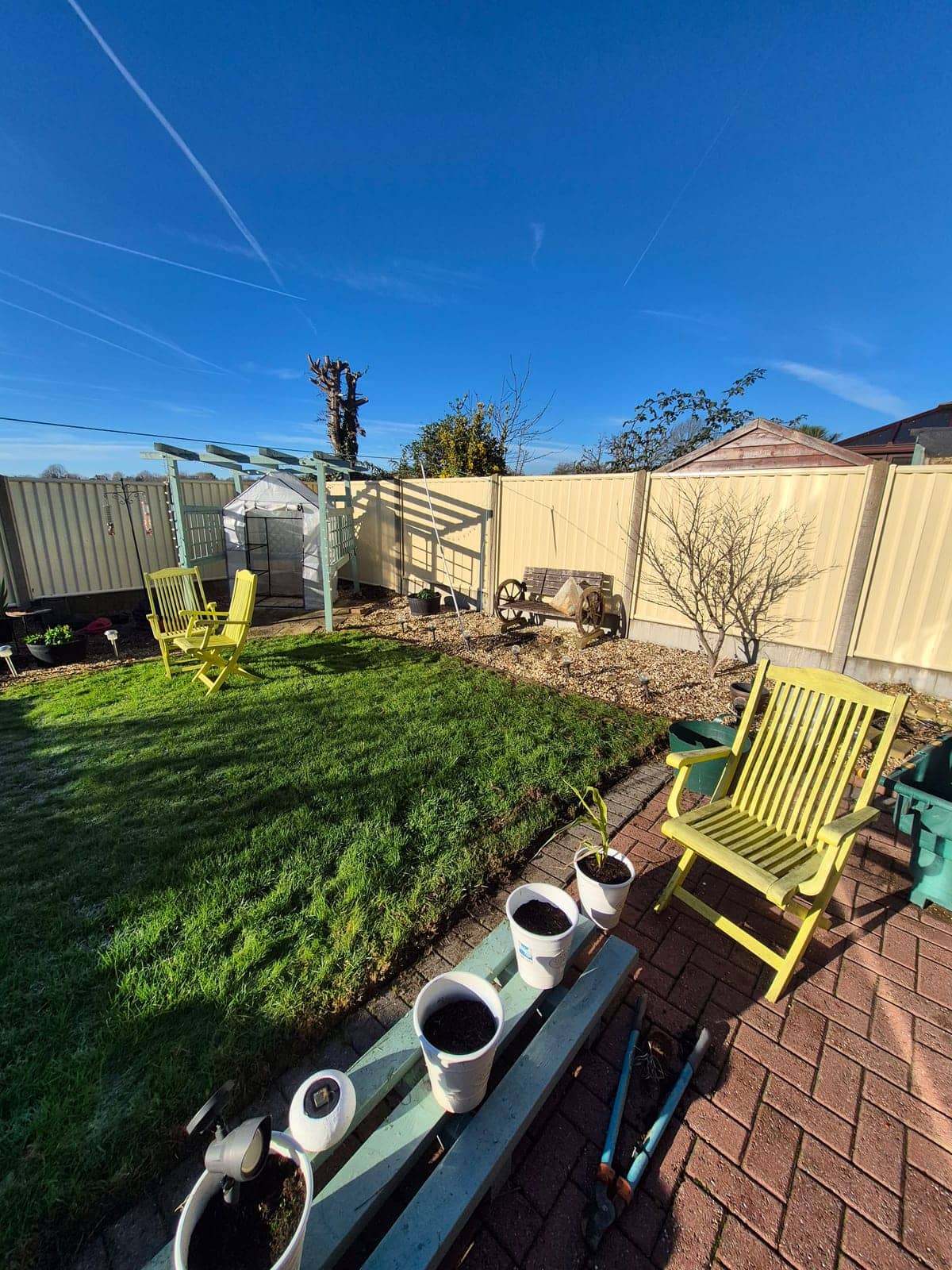
A scarified lawn looks brutal for about a week: bare patches, a thin covering of grass, and a pile of raked-out debris that can be genuinely startling the first time you see how much comes out of what looked like a perfectly normal lawn. Then it thickens back up, usually better than it has looked in years.
Here is what scarifying actually does, why moss keeps winning without it, and when to do it for the best result.
What thatch is, and why it matters
Thatch is the layer of dead grass stems, roots and organic debris that builds up between the soil and the green leaf you see and mow. A small amount is normal and even helpful, cushioning the lawn. Too much, and it starts acting like a sponge that stops water and feed reaching the soil, and gives moss exactly the damp, airless conditions it wants to spread in.
Regular mowing does not remove thatch. It only cuts the leaf above it, which is why a lawn can be mown perfectly every week and still be sitting on a thickening mat of thatch underneath.
Why moss takes hold in the first place
Moss is not really the problem, it is a symptom of conditions grass is struggling with. It moves in wherever grass is thin or weak, which usually comes down to a combination of:
- Shade, from trees, fences or buildings, where grass cannot grow thickly enough to compete.
- Compaction, which starves grass roots of air and lets moss's shallow roots cope better.
- Poor drainage or a naturally damp spot, conditions moss thrives in and grass does not.
- Mowing too short, which weakens grass and opens gaps moss is quick to fill.
- A thick layer of thatch holding moisture right where moss wants it.
What scarifying actually removes
Scarifying rakes through the lawn, mechanically or by hand on a small area, pulling out dead thatch and moss and leaving the healthy grass roots in place. It is aggressive by design: a light going-over barely touches the thatch layer, so a proper scarify looks alarming, with a surprising volume of brown, matted debris raked out even from a lawn that looked reasonably tidy beforehand.
That is the point. Everything raked out was choking the lawn from underneath. What is left afterwards is thinner-looking but genuinely healthier, with light, air and water finally able to reach the soil again.
When to scarify in Lincolnshire
Early autumn, September into October, is the best window. The soil is still warm enough for the lawn to recover and thicken back up quickly, the summer's growth has finished, and it lines up naturally with aerating and overseeding, which both work best on freshly scarified ground.
Spring, once the lawn is growing strongly, is a workable second option, particularly for lighter moss treatment rather than a full thatch-clearing scarify. Avoid scarifying in a drought or a hard frost. Neither gives the lawn a fair chance to recover.
What happens after a scarify
The week or two after scarifying matters as much as the job itself:
- The lawn will look patchy and thin. That is expected, not a sign anything went wrong.
- Overseed bare and thin patches straight after, while the soil is open and seed can make good contact.
- A feed once the new growth is coming through helps the lawn fill back in faster.
- Keep off the lawn where practical for a week or two, and avoid mowing too short until it has recovered.
- Water lightly if the weather stays dry, to help any overseeding germinate.
Does moss come back after scarifying?
It will, if whatever let it establish in the first place is still there. Scarifying clears the moss that has already grown, but it does not fix shade, compaction or poor drainage on its own, which is why we treat scarifying as one part of a proper lawn treatment programme rather than a standalone fix. Pairing it with aeration for compaction, and a feeding programme to thicken the grass up, is what actually keeps moss from simply moving back in the following year.
Sort it, don't just read about it