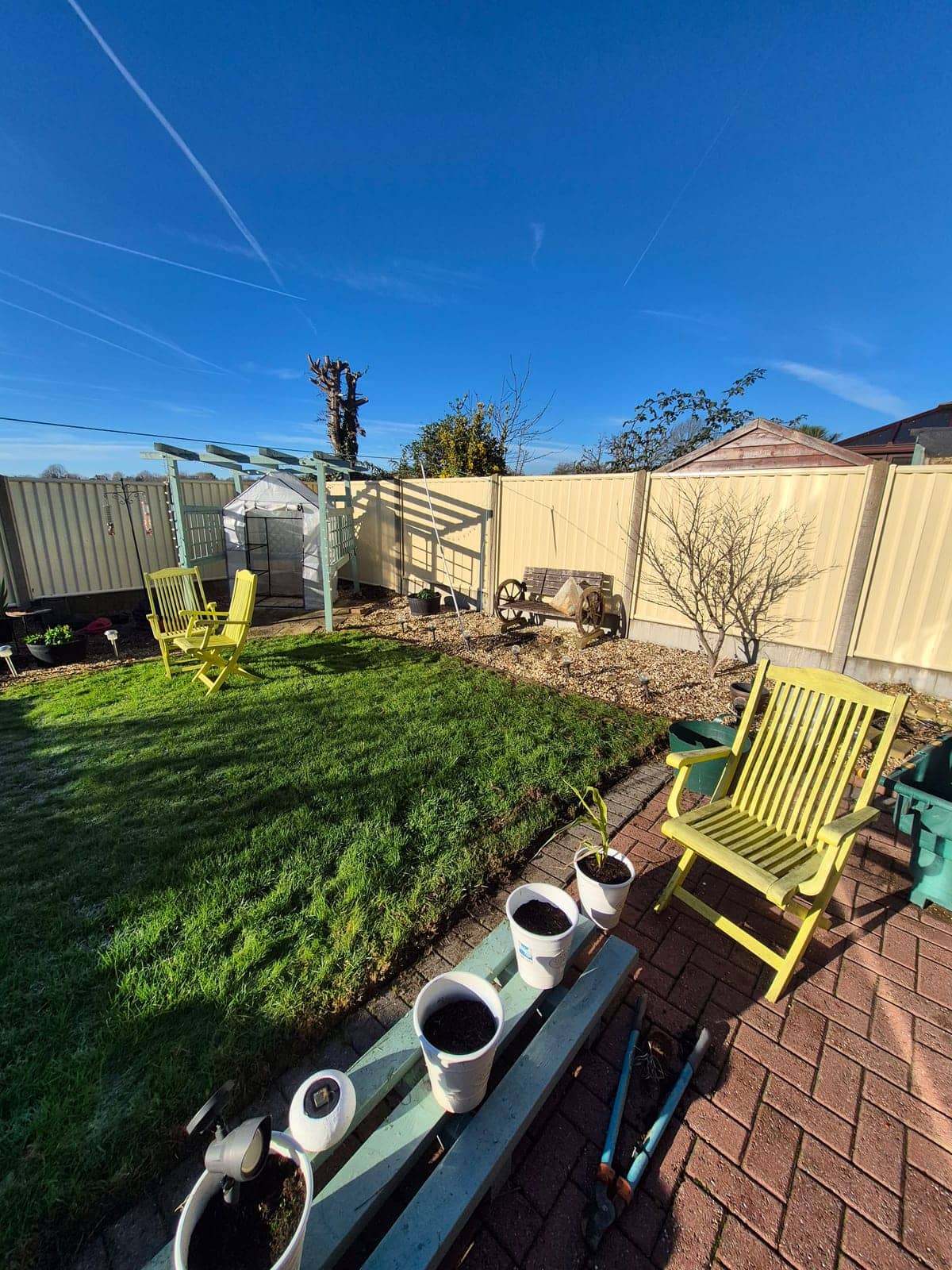
Feed the wrong thing at the wrong time and a lawn can end up worse off: soft growth caught by frost, weed killer wasted on grass that is not actively growing, or feed that just washes straight through wet clay before the roots get a chance at it.
This is the feed and weed calendar we actually work to across Lincoln and Lincolnshire gardens: what to apply, roughly when, and the timing mistakes that waste a bag of product and a Saturday afternoon.
Feed and weed are two different jobs
It is worth separating the two before the calendar, because they are not the same job even though shop shelves often bundle them into one bag. Feeding is about giving the grass what it needs to grow thickly and outcompete everything else. Weed control is about removing what is already there and winning against the grass for light, water and space.
A thick, well-fed lawn is also the best long-term weed control there is, since dense grass leaves weeds nowhere to germinate. That is why the calendar below leads with feeding, not weed killer.
Spring: the first feed
Once the grass is visibly growing, usually mid to late April in Lincolnshire, a spring feed high in nitrogen gets the lawn into strong, thick growth for the season. Applying it too early, while the ground is still cold, wastes most of the feed, since the grass is not growing fast enough to use it.
If moss came through the winter, this is also the point to treat it, since a moss treatment works best once the lawn is growing and able to fill the gaps moss leaves behind once it has been raked out.
Late spring into summer: weed control
Selective weed control, the kind that kills broadleaf weeds like dandelion and clover without harming the grass, works best when both the weed and the grass are actively growing, typically May through July.
- Apply on a still, dry day with no rain forecast for at least 24 hours, or it washes off before it works.
- Do not mow for a couple of days either side of treatment, so the weed has enough leaf to absorb it.
- Spot-treat isolated patches rather than blanket-treating a whole lawn for a handful of weeds.
- Expect weeds to look worse before they disappear. That curling, blackening look is the treatment working, not a failure.
Summer: hold off, mostly
A dry Lincolnshire summer is not the time for more feed or weed treatment. Feeding a lawn that is stressed by drought can scorch it, and weed killer applied to grass that has gone dormant in the heat does not work properly and can stress the lawn further. Watering priorities, if you water at all, and treatment can wait for the softer weather either side of summer.
Autumn: the feed that actually matters most
September into October is arguably the most important feed of the year for a Lincolnshire lawn. An autumn feed is low in nitrogen and higher in potassium, which toughens the grass up for winter rather than pushing soft, sappy growth that frost then damages.
This is also the natural pairing point with scarifying and aeration: clear out thatch and moss, relieve compaction, then feed, so the treatment actually reaches roots that are ready to use it. See our guides to lawn scarification and lawn aeration for the detail on those two jobs.
Winter: nothing to apply, plenty to avoid
No feed and no weed treatment over winter. The grass is not growing enough to use either, and walking a feed spreader over frozen or waterlogged ground does more harm than good. The only winter job is staying off the lawn when it is frosty or sodden, and keeping leaves off it so light still gets through.
The timing mistakes that waste a season
A few patterns that come up constantly:
- Feeding in March because the packet says spring, before the grass is actually growing enough to use it.
- Weed killer applied right before rain, so it washes off before it has worked.
- Treating moss without dealing with the shade, compaction or poor drainage that let it establish, so it simply returns.
- Skipping the autumn feed because spring already happened, when autumn is the one that matters most for winter survival and next year's thickness.
Sort it, don't just read about it