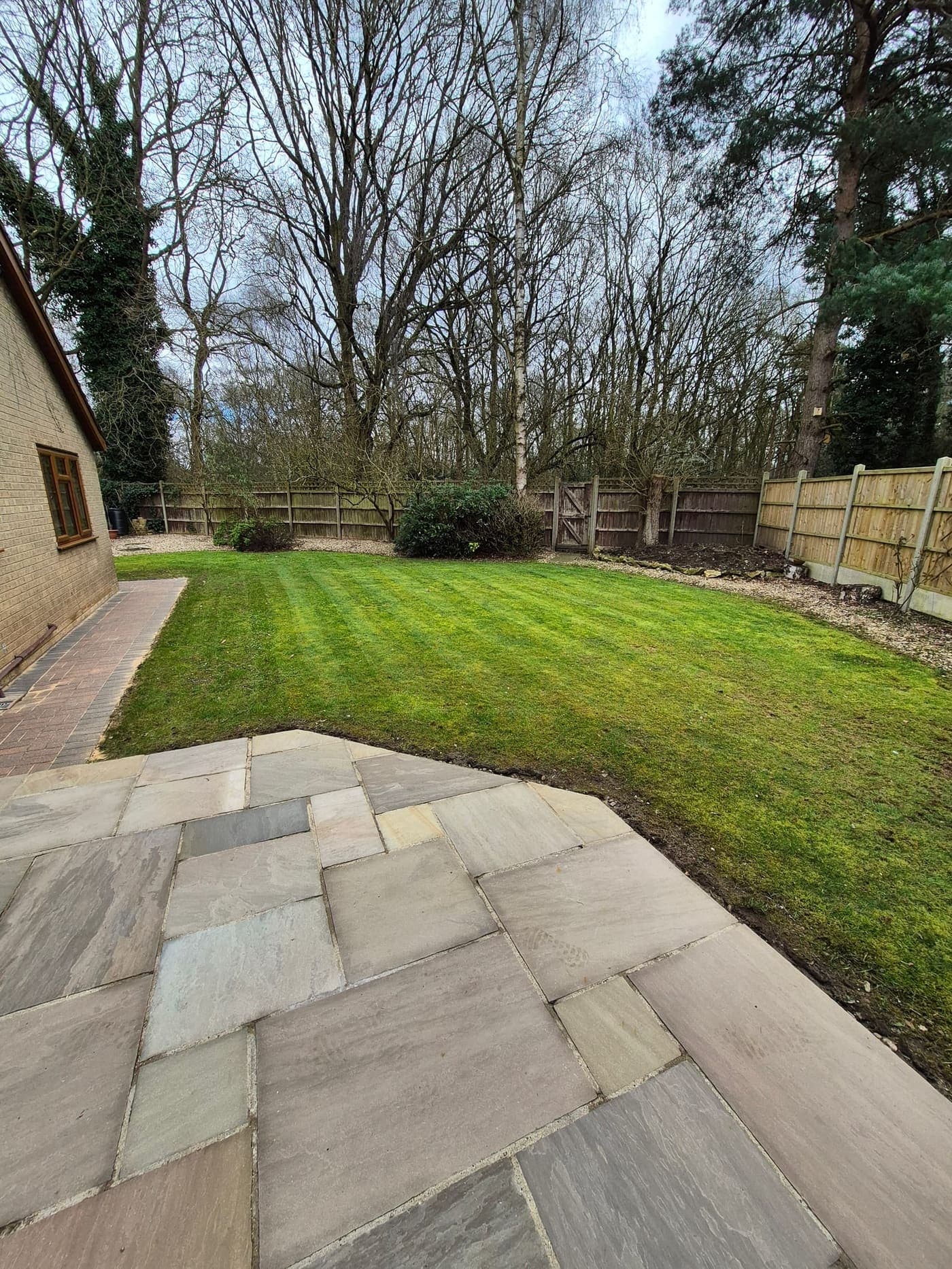
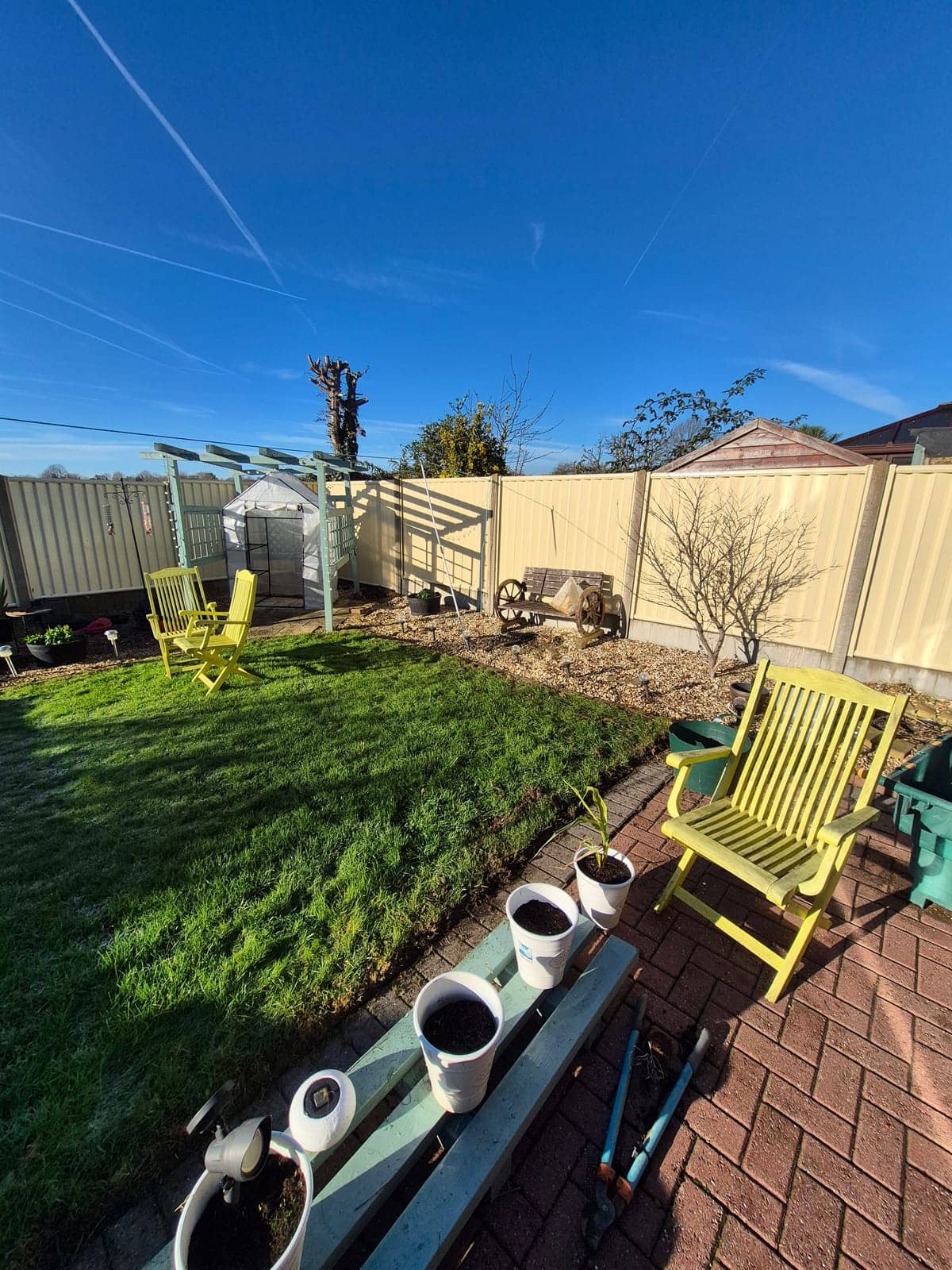
A lawn that has gone from green to straw-coloured over a dry summer looks finished. Most of the time it is not. What it actually needs is not a search engine and a bag of feed, it needs a proper renovation, done in the right order, starting at the right time of year.
This is not a diagnose-it-yourself guide. It is what we actually do when a customer calls us about a scorched lawn: what we look at, what order the jobs happen in, and what to expect while it is happening. If you want the DIY version, our lawn care calendar and the individual scarifying, aerating and feeding guides cover that. This is the programme, as we run it.
What we actually look at first
Before anything gets touched, we check three things on site: how deep the thatch layer is, how compacted the soil is underneath it, and whether the grass crowns, the base where the leaf meets the root, are still alive. A pull test tells you plenty here: living grass resists and springs back, dead grass comes away in a mat with no resistance at all.
Most lawns that look completely dead in August still have living crowns. The leaf has gone brown to save water, which is the plant protecting itself, not dying. What has usually actually failed is the soil underneath: years of mowing and foot traffic have compacted it, thatch has built up on top of it, and neither water nor feed has been getting through for a while. Drought just exposed a problem that was already there.
Why we wait for September
We could start renovation work the moment the lawn looks bad, but doing it properly in a heatwave wastes the effort. New seed needs consistent soil moisture to germinate, and August soil in Lincolnshire dries out again within days even after rain. September changes that: the soil is still warm from summer, which speeds germination, but the weather has usually turned reliably wetter, and weed competition drops off as everything else slows down too. Seed sown in September gets a full autumn to establish before it has to cope with a Lincolnshire winter.
That is why we would rather book a scorched lawn in for September than rush it in August. A week or two's wait for the right conditions beats redoing the work in spring because the first attempt never took.
The renovation sequence, as a job
On the day, the work goes in a specific order because each step sets up the next one properly.
- Cut low: the lawn gets mown shorter than normal first, so the next steps can actually reach the soil instead of working through a thick canopy of leaf.
- Scarify: a scarifier rakes out the dead thatch and moss sitting between the soil and the leaf. This looks like the most damage of the whole job, a genuinely alarming pile of brown debris comes out of a lawn that looked fine on top, but it is the step that lets everything else actually work.
- Aerate: on compacted ground, which is most Lincolnshire lawns after a dry summer, we open the soil up so air and water can get down to the roots again rather than sitting on the surface.
- Overseed: fresh seed goes down into the open soil the scarifying and aerating just exposed, filling in the thin and bare patches.
- Top-dress: a light layer of soil improver over the seed protects it and helps it hold moisture while it germinates.
- Feed: an autumn feed, low in nitrogen, gets the new and existing grass toughened up for winter rather than pushed into soft growth.
It looks worse before it looks better
Nobody tells customers this part, so we do. The day we finish, the lawn looks patchy, thin and a bit wrecked: bare soil where the seed has gone down, brown debris raked to the edges, nothing green and thick about it yet. That is completely normal and not a sign anything has gone wrong. A lawn that still looked lush straight after a proper scarify was not scarified hard enough.
The improvement is not instant. It is real, but it takes weeks, not days, which is exactly why the timing in September matters: there is enough autumn left for that improvement to actually happen before growth stops for winter.
Seed choice for a Lincolnshire garden
We keep this simple rather than pretending there is one perfect blend. For a family lawn that takes foot traffic, kids, dogs, a ryegrass-based mix wears well and establishes fast, which matters when you are racing the calendar into autumn. For a lawn where the finish matters more than the wear, a finer fescue-based mix gives a denser, softer result, at the cost of being less forgiving of hard use. Most gardens we renovate get a ryegrass-led mix for exactly that reason: it is the one that actually copes with how the lawn gets used.
What we need from you in between
The renovation gets the lawn moving again, but the first few weeks after matter almost as much as the day itself.
- Keep off it where you can while the seed germinates, typically one to three weeks.
- Water little and often just after sowing, unlike an established lawn, which wants the opposite. New seed dries out and dies in hours, not days.
- Do not feed again yourself in between. One autumn feed is enough, more just risks pushing soft growth into the cold.
- First cut waits until the new grass is a couple of inches tall, and goes in on a high setting.
What to expect, and when
Germination shows in one to three weeks, depending on soil temperature and how much rain we get. The lawn looks properly established, thick enough that you stop noticing the seed lines, by six to eight weeks. The real result, the lawn genuinely back to where it was or better, usually shows the following spring, once it has had a full dormant winter to root down properly. That is the honest timeline. Anyone promising an instantly transformed lawn in September is not describing the same process we run.
Sort it, don't just read about it